
Guides
Gastroscopy and colonoscopy in China: from booking to the final report
How to organise assessment, preparation, sedation support and results without mistaking a procedure appointment for a complete episode of care.
By MedicCN, Editorial research · published 2026-10-15 · sources checked 2026-10-14
MedicCN editorial research. Sources checked on 14 October 2026; older source dates are identified where relevant. This guide has not undergone independent clinical review. Hospital inclusion does not imply a partnership or confirmed access.
Book an assessment before treating the test as a travel activity
Gastroscopy examines the upper digestive tract; colonoscopy examines the colon and rectum. The reason for testing determines the appointment, preparation and possible next steps. A discounted package is not a reason on its own to have either procedure.
Start with a gastroenterology or endoscopy-service enquiry. Say whether the request follows symptoms, a previous finding or a clinician’s screening recommendation. Include previous reports if requested, and explain whether you are seeking a consultation first or already have a referral for a specific investigation.
HKU–Shenzhen publishes endoscopy services and preparation guidance. Its instructions distinguish different procedures and schedules, illustrating why you need the instructions for the actual appointment. Ask whether the first visit is assessment only and whether sedation assessment is a separate step.
Clarify what ‘painless’ means for your appointment
A service advertised as ‘painless’ does not remove the need to discuss sedation, risks and recovery arrangements. Ask the clinical team which method is proposed and whether it is suitable for you.
The Chinese label 无痛 is common in endoscopy information. It does not tell you, by itself, the depth of sedation, who administers it or what assessment is required. Tell the team about previous anaesthetic problems, existing conditions and all medicines or supplements you take.
If sedation is planned, arrange an adult escort and the required supervision afterwards before the appointment. Do not assume that a taxi driver or hotel reception can fulfil that role. Follow the unit’s restrictions on driving, work and other activities after sedation; feeling awake does not establish that its effects have fully passed.
Keep the procedure day free of tightly timed onward travel. The examination, recovery and discharge assessment take different amounts of time, and an unexpected intervention may change the plan. A same-day return across a border should be discussed with the treating team rather than built into the booking by default.
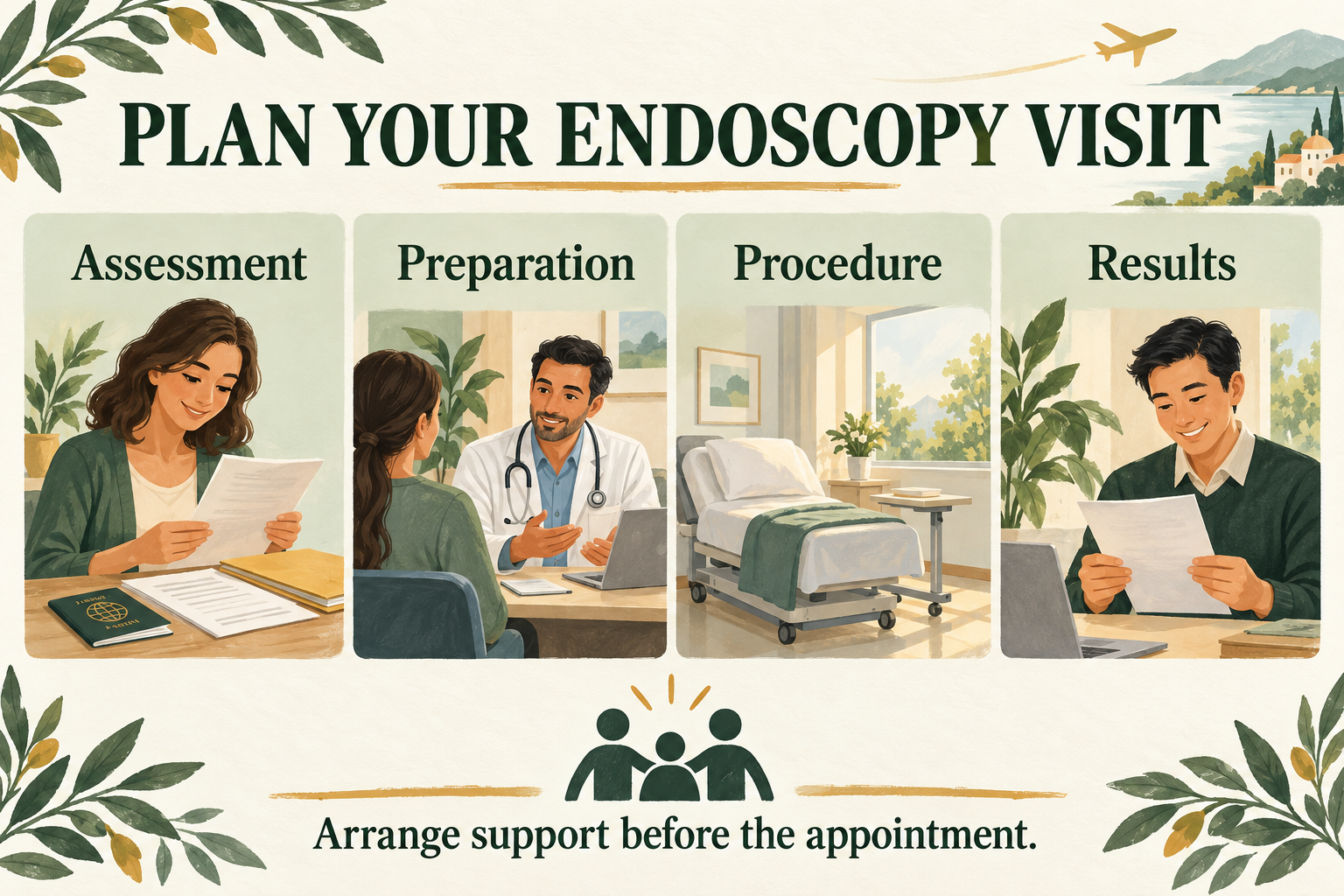
Get the preparation sheet before you leave home
Preparation belongs to the procedure and the patient. Obtain written instructions you can understand, including the schedule, prescribed preparation and a contact if you cannot complete it.
Colonoscopy usually involves dietary changes and bowel cleansing. Poor preparation can prevent a complete examination. The timing and product depend on the unit’s protocol and your circumstances; a generic online recipe is not an adequate substitute. For gastroscopy, follow the unit’s fasting instructions and confirm how they apply when procedures are combined.
Tell the clinical team about anticoagulants, antiplatelet medicines, diabetes treatment and other regular medicines. Ask for individual instructions; do not stop or change a prescription using a general article. HKU–Shenzhen’s public sheet includes medication-related cautions, but it is dated September 2022 and should not replace current instructions for your case.
If preparation causes problems or you cannot finish it, contact the unit. Explain what you took and when. Do not improvise extra doses to meet the appointment time. Keep the original instructions and any translated version together so an interpreter can clarify an ambiguous line.
A scope price may leave several items outside the quote
Request the scope of the estimate, particularly sedation, biopsy, pathology and any treatment performed during the examination. These can change both the bill and the aftercare instructions.
Ask whether the quoted service is a diagnostic examination only, and how additional work is authorised if a finding needs attention. A useful estimate separates the consultation, procedure, sedation, preparation medicines and laboratory work. No single endoscopy price can represent all hospitals or every possible finding.
Consent should explain what the team may do, the relevant risks and the alternatives. Resolve language needs before that discussion. If a companion is helping, confirm what information you consent to share and who should receive the discharge instructions.
Keep the estimate and final itemised bill. If the final amount differs, compare the actual services with the original inclusions before assuming either a billing error or that every additional charge was included.
Leave with a plan for the result that is still pending
An endoscopy report may describe what was seen, while a biopsy result follows later. Establish who will explain both, and how the final recommendation will reach you after you leave the hospital.
Ask for the procedure report and images available for release, whether specimens were taken, the expected pathology timing and the result-review appointment. Keep a record of the department contact rather than relying on a promise that somebody will call.
Follow the discharge instructions about eating, activity and symptoms requiring help. Severe or worsening pain, substantial bleeding, fever, breathing difficulty or fainting after a procedure warrant prompt medical attention; do not wait for a routine report review. The team should explain the signs relevant to what was done.
If you will continue care overseas, obtain the final reports and any requested translation. Arrange for your usual clinician to review the findings. The useful endpoint is a clear explanation of what happens next, not simply a completed examination.