
Guides
Six hospitals in China to consider for orthopaedic care
Sports injuries, joint problems and spinal conditions need different clinics. Six hospitals with documented services, and the details that make a shortlist useful.
By MedicCN, Editorial research · published 2026-10-15 · sources checked 2026-10-14
MedicCN editorial research. Sources checked on 14 October 2026; older source dates are identified where relevant. This guide has not undergone independent clinical review. Hospital inclusion does not imply a partnership or confirmed access.
A knee problem does not always lead to the same clinic
A sports injury, a joint-replacement assessment and a problem after an old fracture can all involve the knee, but they may belong to different teams. Begin with the problem and the purpose of the consultation, then choose the hospital.
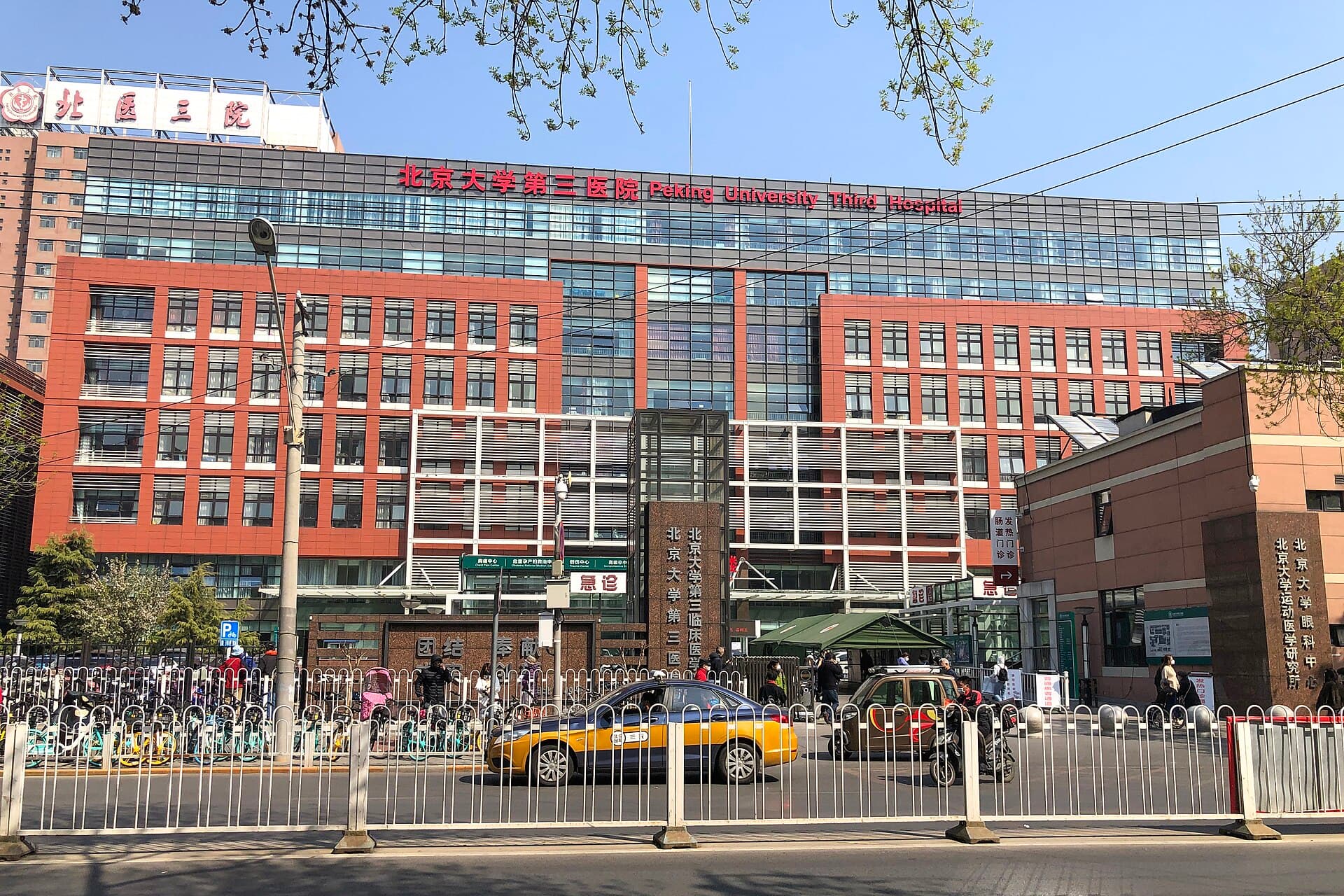
Peking University Third Hospital publishes distinct sports-medicine subspecialties. Shanghai Sixth People’s Hospital separates trauma orthopaedics from joint surgery. HKU–Shenzhen has joint and sports medicine alongside a separate spine service. Those distinctions give you a more useful starting point than a list that treats all orthopaedic care as interchangeable.
For an established diagnosis, use the wording in your report. If you do not have a diagnosis, describe where the problem is, when it began and what has changed; let a clinician or the hospital’s clinical triage service identify the first appointment. An international trip is a plan for elective care, not a substitute for prompt local assessment of a new serious injury.
Beijing and Shanghai: sports medicine, trauma and joint services
PKU Third Hospital and Shanghai Sixth offer specific departmental starting points. Jiahui provides another Shanghai option when you want to enquire through an English-language service directory.
1. Peking University Third Hospital, Beijing. Its sports-medicine department lists knee, hip, shoulder and elbow, and foot and ankle subspecialties, alongside rehabilitation. It is a concrete starting point for a planned sports-injury assessment. Choose the relevant anatomical clinic rather than assuming every sports-medicine appointment covers the same work.
2. Shanghai Sixth People’s Hospital. Its trauma department describes care for pelvic and limb injuries and their complications; the joint-surgery service covers disorders around several major joints. For a previous fracture, send the original operation report and later imaging. For a proposed joint replacement, make the assessment question explicit instead of booking from the hospital name alone.
3. Jiahui International Hospital, Shanghai. Its English service directory lists Orthopaedics and Sports Medicine and a Spine Clinic. That makes it worth an enquiry when you want to establish both the clinical service and English-language arrangements before travelling. The directory does not establish that a particular operation, implant or surgeon is available for your case.

Chengdu, Guangzhou and Shenzhen: three further options
A suitable team closer to your family or recovery base can be more practical than a distant hospital with a familiar name. These three hospitals publish orthopaedic services that deserve consideration on their own merits.
4. West China Hospital, Sichuan University, Chengdu. Its orthopaedic department provides an established entry point within a large general hospital. Start with the department’s current clinic information and the question you need assessed. This can be useful when the enquiry also involves other medical conditions that need coordination within the same institution.
5. The Third Affiliated Hospital of Sun Yat-sen University, Guangzhou. Its orthopaedic profile describes spine and joint work, including joint replacement and revision interests among its clinicians. Confirm the campus and subspecialty in the appointment; a university affiliation alone does not identify where you should attend.
6. The University of Hong Kong–Shenzhen Hospital. The joint and sports-medicine service describes joint, ligament, tendon and cartilage conditions, including joint replacement and revision. Its separate spine service lists spinal deformity and other spinal conditions. For someone based in the Greater Bay Area, it is a concrete local enquiry before planning a longer journey.
Make the first appointment count
Bring the clinical history behind the scan: the original injury or diagnosis, treatment already tried, previous operations and the activity you want to regain. A scan alone cannot describe how the problem affects your life.
Prepare a short chronology and bring existing image files as well as written reports. If you have an implant, include the implant information and operation record if available. Do not arrange new imaging simply to complete a travel folder; the reviewing clinician should decide what is required.
PKU Third’s international sports-medicine guide describes passport-based registration and advises bringing previous records and imaging. Its guidance is specific to that service. Other hospitals may use a different registration process, so obtain the relevant instructions after identifying the clinic.
Before agreeing to treatment, discuss the alternatives, expected recovery tasks and who will supervise rehabilitation. If surgery is proposed, establish when the team expects to review you and how problems will be handled after you leave the city. A convenient operation date is only one part of a workable plan.