
Guides
10 hospitals in China for anorectal care: finding the right department
A specialty-led guide to care for hemorrhoids, fistulas, pelvic-floor problems and complex colorectal disease, with ten hospital departments and their official information.
By MedicCN, Editorial research · published 2026-10-10 · sources checked 2026-10-09
An editorial selection based on linked hospital and government information. Sources checked on 9 October 2026. This guide has not undergone independent clinical review; hospital inclusion does not imply a MedicCN partnership or a confirmed appointment.
The condition matters more than a hospital’s overall reputation
For hemorrhoids or an anal fistula, start with a named anorectal service. For bowel cancer, inflammatory bowel disease or a difficult reoperation, look closely at the colorectal team and the other specialties involved. These are overlapping fields, but they are not interchangeable appointments.
Chinese hospital websites commonly use 肛肠科 for anorectal medicine and surgery, and 结直肠外科 for colorectal surgery. The department’s own description tells you more than an English translation of its name. Some cover a wide range of bowel disease; others place greater emphasis on anal conditions and pelvic-floor function.
This selection brings together ten hospitals with substantive, publicly documented services. It is a shortlist of departments, not a league table of surgical results. For most entries, the sources establish the clinical service rather than an English-speaking appointment pathway.
| Hospital / city | Department or documented focus |
|---|---|
| Guang’anmen · Beijing | Hemorrhoids, fistulas and rectal prolapse |
| Xiyuan · Beijing | Complex anal disease, pelvic-floor conditions and colorectal care |
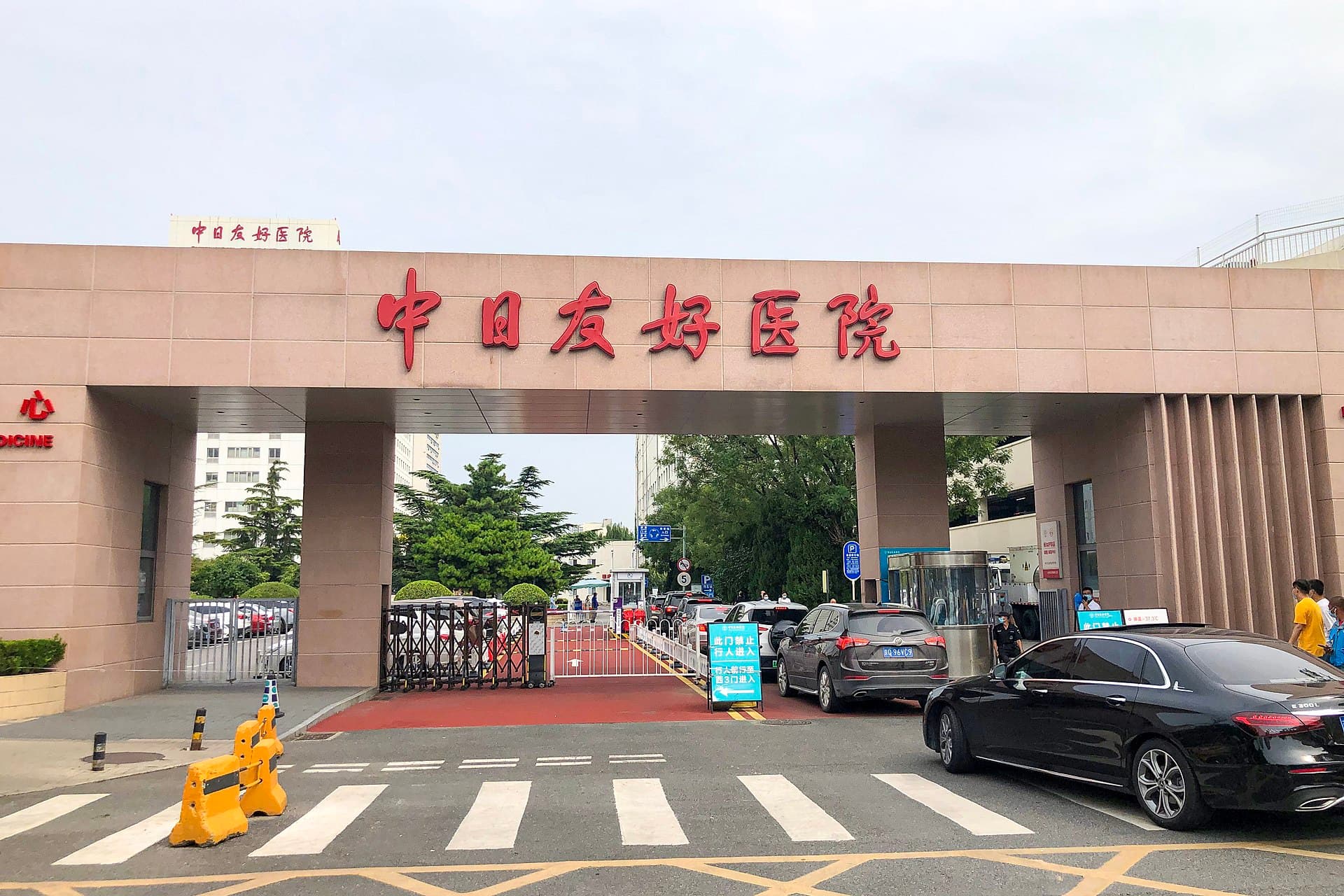
| China-Japan Friendship · Beijing | Anorectal care; international-department service described |
| Longhua · Shanghai | Dedicated anorectal department in a Chinese medicine hospital |
| Nanjing Hospital of Chinese Medicine · Nanjing | Defecatory disorders, fistulas, perianal infection, IBD and colorectal tumours |
| Jiangsu Province Hospital of Chinese Medicine · Nanjing | Complex anorectal disease and integrated IBD services |
| Jiangsu Second Chinese Medicine Hospital · Nanjing | Anal disease, constipation, incontinence and colorectal conditions |
| Sixth Affiliated Hospital of Sun Yat-sen University · Guangzhou | Anorectal surgery, pelvic-floor services and colorectal surgery |
| Clifford Hospital · Guangzhou | A dedicated service covering common and complex anal conditions |
| West China Hospital · Chengdu | Complex colorectal surgery, including IBD-related surgery |
- Guang’anmen Hospital — anorectal department
- Xiyuan Hospital — anorectal department
- China-Japan Friendship Hospital — international department
- Longhua Hospital — anorectal department
- Nanjing Hospital of Chinese Medicine — anorectal centre
- Jiangsu Province Hospital of Chinese Medicine — anorectal department
- Jiangsu Second Chinese Medicine Hospital — anorectal department
- Sixth Affiliated Hospital of Sun Yat-sen University — surgical departments
- Clifford Hospital — anorectal department
- West China Hospital — colorectal surgical team
Beijing: three distinct starting points
Guang’anmen and Xiyuan publish broad anorectal department profiles. China-Japan Friendship adds a particularly useful detail for overseas readers: an anorectal service described within its international department.
Guang’anmen Hospital. Hemorrhoids, anal fistulas and rectal prolapse are specifically highlighted in its department profile. That gives patients with an established diagnosis a concrete place to start. Its appointment notice says non-emergency care is booked in advance through official channels; do not plan a visit around an assumption that you can simply walk in and see a specialist.
Xiyuan Hospital. Its stated scope includes complex fistulas and abscesses, prolapse, constipation and colorectal conditions. For someone who has already had an operation, the useful question is whether the clinic handles that particular recurrent problem. Bring the original operation report rather than relying on a description such as ‘I had fistula surgery a few years ago.’
China-Japan Friendship Hospital. The international department’s description includes an anorectal ward, giving an overseas enquiry a more identifiable administrative destination. The hospital also publishes information on its anorectal services in the wider hospital. Specify the service you want to use when asking about appointments: a specialist’s name alone may not identify the clinic or its fees.
Shanghai and Nanjing: look beyond the label ‘Chinese medicine’
These departments describe surgical and diagnostic services alongside their Chinese medicine traditions. Read the proposed treatment itself, including its alternatives, rather than assuming the hospital’s name tells you what will happen.
Longhua Hospital, Shanghai. Longhua has a dedicated anorectal department and a published history in this specialty. Its profile describes services across more than one hospital site. The practical priority is to identify the exact clinic and campus; the department’s institutional reputation does not tell you where a particular doctor is seeing patients that week.
Nanjing Hospital of Chinese Medicine. The centre sets out five areas: defecatory disorders, colorectal tumours, hemorrhoids and complex fistulas, inflammatory bowel disease, and perianal infection. This is a useful distinction for patients whose symptoms have been described simply as an ‘anorectal problem’. Give the booking team the existing diagnosis so it can identify the relevant clinic.
Jiangsu Province Hospital of Chinese Medicine. Its profile describes complex anorectal disease, integrated inflammatory bowel disease care and complex intestinal surgery. That makes it worth investigating when bowel inflammation is part of the established diagnosis, rather than approaching a fistula as an isolated local problem. The records should include previous endoscopy and pathology reports if available.
Jiangsu Second Chinese Medicine Hospital. Its department lists hemorrhoids, fistulas, fissures, constipation, incontinence, prolapse and colorectal disease among its services. It is a separate institution from the other two Nanjing hospitals in this guide. Save the full Chinese hospital name with the appointment confirmation to avoid booking transport to the wrong site.
Guangzhou and Chengdu: distinguish local anal disease from complex bowel surgery
Sun Yat-sen’s Sixth Affiliated Hospital and West China publish detailed colorectal surgical services. Clifford adds a Guangzhou option with a dedicated anorectal department. The correct comparison depends on the diagnosis already established.
The Sixth Affiliated Hospital of Sun Yat-sen University, Guangzhou. The hospital describes anorectal surgery and a pelvic-floor and difficult anorectal disease service, as well as separate colorectal surgical units. That internal distinction is valuable: a patient with a pelvic-floor disorder and a patient seeking cancer surgery may need different teams within the same institution.
Clifford Hospital, Guangzhou. Its anorectal profile lists common anal conditions alongside fistulas, abscesses, prolapse and other problems. Use that profile to frame an enquiry, then request the proposed assessment and the clinician’s explanation of treatment options. A long service list does not establish that a particular operation is necessary or that one technique has better results.
West China Hospital, Chengdu. The colorectal team describes surgery for inflammatory bowel disease and other complex colorectal conditions. This entry is particularly relevant when the question involves bowel surgery, prior operations or an established complex diagnosis. It would be a poor shortcut to treat that breadth as a reason to travel internationally for every uncomplicated anal complaint.
Make the first appointment about a diagnosis, not a promised operation
A useful consultation should leave you understanding what is being treated, why the proposed treatment fits, and what care will be needed afterwards. A procedure name or a claim of ‘minimally invasive’ is not enough to make the travel decision.
For a previous operation, assemble the discharge summary, operation report and subsequent clinic letters. For an established bowel diagnosis, include the relevant endoscopy, imaging and pathology reports. Ask the receiving hospital which files it can review and whether translation is needed before sending a large record bundle.
Discuss recovery in practical terms: wound care, further visits, sitting comfortably, access to a bathroom, and who will assess a problem after you return home. The answers depend on the condition and treatment. An appointment for assessment cannot reasonably serve as a fixed surgical itinerary.
New or unexplained bleeding deserves medical assessment rather than an assumption that it is hemorrhoids. Severe anal pain with fever needs urgent local assessment. Heavy or ongoing rectal bleeding, or bleeding with faintness, warrants emergency care; do not wait for an overseas booking. For an elective specialist review, begin with the department and records; let the clinical plan determine whether travel makes sense.