
Guides
Can you see a doctor in China without speaking Chinese?
Yes—but book the language support as carefully as the appointment. Here is how to get from the first enquiry to a prescription you understand.
By MedicCN, Editorial research · published 2026-10-10 · sources checked 2026-10-09
An editorial selection based on linked hospital and government information. Sources checked on 9 October 2026. This guide has not undergone independent clinical review; hospital inclusion does not imply a MedicCN partnership or a confirmed appointment.
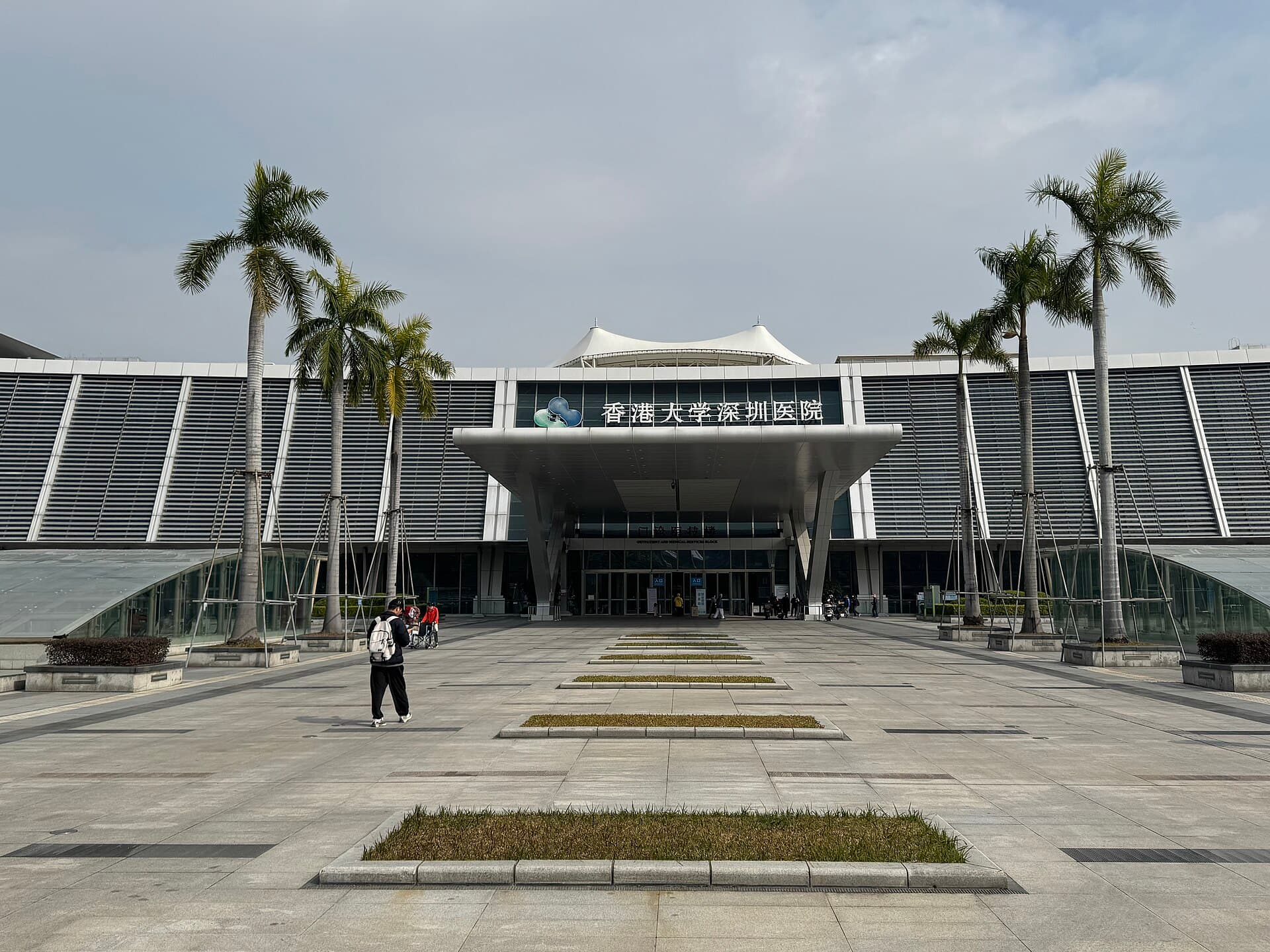
Choose one of three workable routes
An international department, a private international hospital, or an ordinary outpatient clinic with an interpreter can each be a workable choice. What matters is who will help you at the actual appointment, including the parts outside the doctor’s room.
Begin with a hospital that publishes an international-patient contact or an English booking route. Peking Union has a foreign-patient booking notice; HKU–Shenzhen publishes English appointment guidance. Jiahui and Beijing United Family also provide English-language patient information. These are useful places to start a direct enquiry.
The question to ask is specific: ‘Can this appointment and the explanation of any tests be conducted in English, and is there a separate interpreter fee?’ A hospital may have multilingual staff without assigning an English-speaking person to every counter and every appointment.
| Route | Useful when | Settle before booking |
|---|---|---|
| Public hospital international department | You want a particular public hospital’s specialty service | Department, doctor, language arrangements and international-service charges |
| Private international hospital | You prefer to organise the visit through its patient-services team | Relevant specialty, consultation fee, insurance arrangements and referrals |
| Ordinary clinic with an interpreter | You have identified a suitable clinic and can arrange support | Passport registration, interpreter access and the length of the booking |
Make the appointment under your own passport details
Use the hospital’s official booking route and enter the patient’s name as it appears on the passport. If the system will not accept your document or telephone number, ask the hospital for its alternative registration route.
PUMCH directs foreign patients to its English website or bilingual app. HKU–Shenzhen provides separate booking instructions for ordinary and international care. Follow the instructions for the service you actually intend to use; an international appointment and a general outpatient appointment may involve different contacts and charges.
An unsuccessful app registration does not establish that the hospital cannot see foreign patients. It may mean that the app is the wrong entry point for your circumstances. Send a short enquiry through the hospital’s published contact, explaining the document type and the error. Do not create the appointment under a friend’s identity to get past the form.
Keep an offline copy of the confirmation with the Chinese hospital name, campus, building, clinic and time. Confirm where a first-time visitor should check in and whether the original passport is needed. A message saying that your enquiry has been received is different from an appointment confirmation.
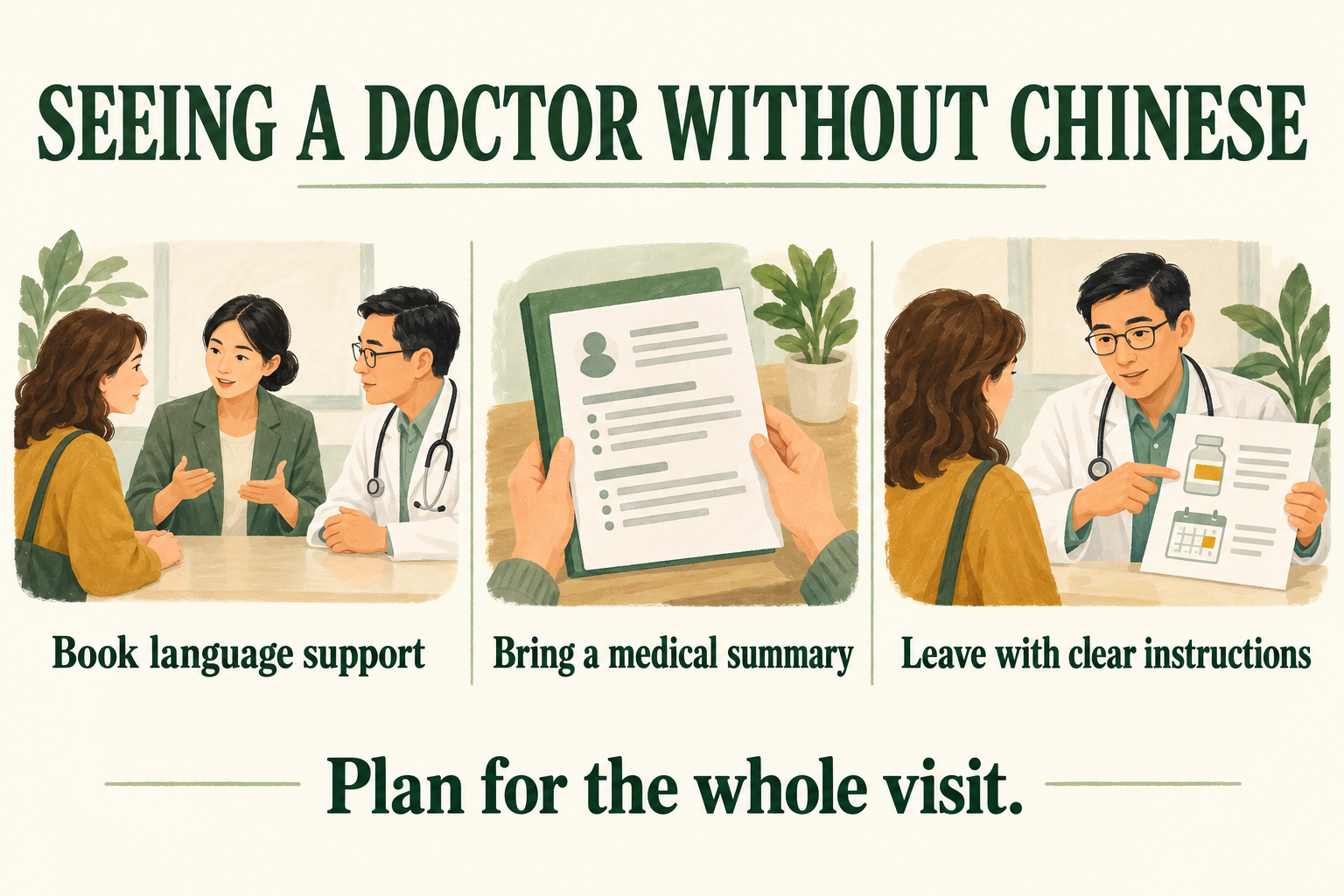
Bring a short medical summary that can actually be read
A clear page describing the problem is more useful at the first conversation than an unsorted folder of screenshots. Keep the original reports with it, because the clinician may need the full detail.
Write down the main reason for the visit, when it began, what has changed, any established diagnosis and the treatment already tried. Include current medicines with their generic names and doses, allergies and relevant previous operations. This is preparation for the clinician’s assessment, not a diagnosis to make yourself.
If you have scans, ask whether the receiving team wants the images as well as the report, and which file format it accepts. For translated reports, retain the original beside the translation. Names, dates, units, drug strengths and terms such as ‘no evidence of’ deserve particular care: a fluent sentence can still reverse the meaning.
A translation app can help with a building name or a queue instruction. For consent, treatment alternatives, significant findings and medication instructions, arrange a clinician or interpreter who can handle the discussion accurately. Jiahui’s patient-rights information explicitly includes interpreter assistance to support understanding; confirm the arrangement for your own appointment rather than assuming it is automatic.
- One-page history, plus original reports and requested imaging
- Medication names, strengths, doses and allergies
- The two or three questions you most need answered
- A confirmed language-support arrangement for the consultation
The consultation is only one part of the visit
At an ordinary outpatient clinic, you may move between registration, the consultation room, a payment point, a test department and the pharmacy. Language support should cover whichever of those stages you cannot manage comfortably.
Shanghai’s public guide describes separate registration, consultation, payment, investigation and medicine-collection steps. A particular hospital may combine some of them. At check-in, establish where to wait and how you will be called; later, ask which orders must be paid or scheduled before you move to the next department.
For a test, find out whether it can be done that day, what preparation is required and how the result will reach the clinician. Do not fast or stop a regular medicine merely because you expect a scan or blood test; obtain the actual instructions from the team responsible for it.
Three short requests are useful to keep on your phone: ‘Please write down the department and room number’ (请写下科室和房间号); ‘Where do I pay?’ (请问在哪里缴费?); and ‘When and how do I get the report?’ (请问什么时候、怎样领取报告?). These help with navigation. They do not replace an interpreted medical conversation.
Leave with instructions you understand
Before leaving, know what the clinician thinks is happening, what you should do next, and how any outstanding results will be reviewed. A pharmacy bag and a payment receipt do not answer those questions.
Ask the clinician or pharmacist to explain each medicine’s name, dose, timing and duration, including whether it replaces something you already take. Repeat the instructions back in your own words. If you do not understand an explanation, ask for it again while the clinician or interpreter is still available.
Find out which reports can be downloaded, which must be requested, and whether English copies or translations are available and charged separately. Beijing United Family publishes a medical-record request process; other hospitals use their own procedures. Ask before departure rather than discovering the requirement at the airport.
If the next step is another consultation, arrange how to book it and what should happen if symptoms worsen in the meantime. For a medical emergency, seek immediate local care rather than waiting for your preferred English-speaking clinic. For planned care, the visit is complete when you understand the next step—not simply when you have finished at the cashier.